


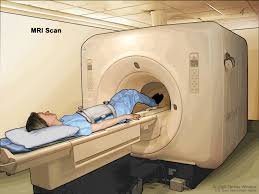
What the patient may need to know about Magnetic Resonance Imaging
Magnetic Resonance Imaging as a non-invasive scan using magnets and radio waves to create detailed 3D pictures of your body’s internal structures (organs, bones, tissues) for diagnosis, treatment planning, and monitoring without using radiation like X-rays, and involves lying on a table that slides into a large, tunnel-like machine. The machine makes loud noises, requiring stillness for clear images, and you’ll need to remove metal items, but it provides crucial information for conditions affecting the brain, spine, joints, heart, and more.
What it is & How it works?
- Technology: Uses powerful magnets and radio waves to excite protons in water molecules in your body, detecting signals that a computer translates into detailed images.
- Safety: No ionizing radiation (X-rays) is used, making it ideal for frequent imaging.
- Equipment: A large tube-shaped scanner with a movable table. What it’s used for Diagnosing injuries, tumors, infections, and abnormalities. Examining the brain, spinal cord, joints, muscles, heart, and internal organs. Planning surgeries or radiation therapy. Monitoring treatment effectiveness.
What to expect during the test
- Preparation: Wear comfortable clothing, remove jewelry/metal, and inform staff about implants or metal fragments.
- The Scan: Lie on the table, which moves into the scanner; remain as still as possible.
- Noise: Expect loud knocking, banging, or clicking sounds (earplugs or headphones provided).
- Contrast: A special dye (contrast) might be given through an IV to highlight certain areas. Duration: 30 minutes to 2 hours, depending on the area.
- Communication: You can talk to the technologist via an intercom.
Why MRI scan is done
- To find out what’s causing any symptoms you’ve been having
- Check your bones and organs
- See how well a treatment is working, for example checking the size of a tumour during and after a cancer treatment.
Preparing for MRI scan
The medical facility where you’re having the MRI scan will tell you if there’s anything you need to do before you have the scan.
Such things may include:
- Not to wear anything that has metal in it, such as jewellery, a bra, hair clips or hearing aids.
- Remove coins or keys from your pockets.
- Change into hospital gown if your clothes have any metal parts, like zips.
- Not to wear make-up.
You’ll be asked to fill in a from if you:
- Are pregnant, or may be pregnant
- Are breastfeeding
- had surgery before
- history any kidney problems
- Have any metal parts in your body such as surgical clips, a pacemaker, dental fillings or bridges
- Have allergies including a dye called contrast medium used during some scans.
What happens during an MRI scan
An MRI scan is done in hospital by a healthcare professional called a radiographer.
It usually takes between 15 minutes and 1 hour but can take longer.
Before an MRI scan
At your scan appointment, you may be given an injection with a contrast medium (dye) to help show more detail in the MRI scan pictures.
During an MRI scan

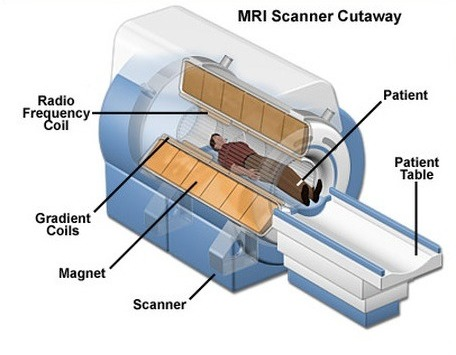
During the MRS scan:
- You’ll be asked to lie flat on a bed.
- You’ll be given ear plugs or headphones to protect your ears because MRI scanners make loud bangs and clicks as they take pictures.
- The radiographer will control the scanner from another room. They’ll be able to hear and speak to you during the scan.
- You’ll need to lie still so the scanner can take clear images.
- You may be asked to hold your breath during parts of the scan.
After an MRI scan
After your scan, the radiographer will come back into the room to lower the bed so you can get up.
If you were given contrast medium, you may be asked to wait in hospital for up to 30 minutes to make sure you do not have a reaction to it.
If you have medicine to help you relax during the MRI scan, you may be able to go home within a few hours. Someone will need to collect you from the hospital and take you home by car or taxi as you should not drive for 24 hours.
You’ll be able to eat and drink as normal after the scan.
Getting your MRI scan results
It usually takes between 1 and 2 weeks for you to get your MRI scan results.
The images need to be looked at by a specialist called a radiologist.
They will write to the doctor who referred you for the scan. You may need a follow-up appointment to talk about your MRI scan results.
If you have not heard anything after a few weeks, contact the doctor who referred you for the scan.
The doctor should talk to you about your results and explain what happens next. Tell them if you have questions about your results, or do not understand them.
Possible complications of an MRI scan
An MRI scan is a common procedure. Serious complications are rare.
If you had an injection of contrast medium (dye), you may get a small bruise in the area where you had the injection.
The contrast medium may cause side effects, but these are usually mild and should not last very long. Side effects may include:
feeling or being sick a skin rash a headache a metallic taste in your mouth feeling dizzy Allergic reactions to the contrast medium are rare, but can include:
coughing, wheezing or sneezing fainting difficulty breathing or swallowing a rash, hives or itchy red skin Most reactions happen soon after or within the first hour of having contrast medium. Tell the radiographer if you start to feel unwell during or after the scan.
You’ll be asked to wait at the hospital for around 30 minutes after having the scan, check for any reaction to the contrast medium.
Credit: NHS UK, Medical News Today


