Healthiest Meats for Weight Loss
Meats of choice for your health journey
When it comes to starting (or restarting) your health journey, one of the first things many people opt for is modifying their meat intake — either by reducing it or cutting it out completely. After all, meat has gotten a bad rap (some research has linked eating too much to an increased riskTrusted Source of cardiovascular disease and other health issuesTrusted Source).
But according to Jim White RDN, ACSM, an exercise physiologist, meat provides a wide array of nutrients utilized by the body for growth, maintenance, and repair.
“Meat as a whole category is an excellent source of protein, heme iron, and micronutrients such as B-12, zinc, and selenium. Even the bones, in creating bone broth and utilizing the marrow, have nutritional benefits like addition collagen and [they’re] rich in iron,” he says.
The truth is, meat can be good for you — but the steak, chicken thigh, or pork chop you choose for dinner is more than just “meat.” There’s food labels, select cuts, fat content, and more to consider.
We’re about to break it all down for you, so you know exactly what to shop for at the grocery store.
How to decode meat labels
A quick trip to the freezer section of your local grocery store and you’re sure to notice countless different labels on your meat products. Organic, grass-fed, free-range… but do they have any real benefits as opposed to conventional meat?
Organic meats often have a slightly higher range of omega-3 fatty acids — which are natural anti-inflammatories. Grass-fed meat often goes hand in hand with organic. These animals generally have outdoor access.
But it’s a little more complicated, White notes. Grass-fed doesn’t always mean 100 percent grass-fed, as some can be grain finished — meaning prior to slaughter, they consume grains.
However, grass-fed and grain-fed meat have about the same amount of protein.
Everything you need to know about beef
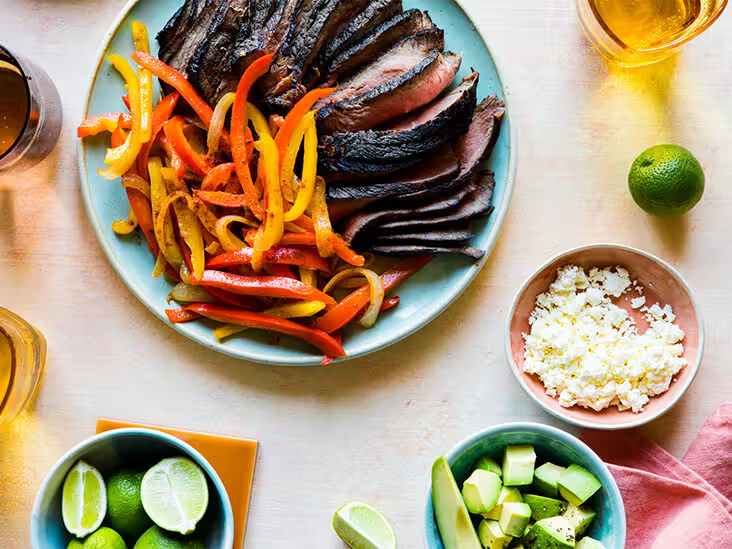
Beef is a type of red meat that comes from a cow or a bovine. It’s a complete, high-quality protein food that contains all the essential amino acids the body needs to support physical activity and a strong, healthy life.
Beef is a good source of:
- protein
- iron
- zinc
- niacin
- choline
- vitamin B-12
“In just one 3-ounce (oz.) cooked serving, you’re getting 10 essential nutrients, including about half your daily value for protein,” White says.
White went ahead and broke that down a little further: The Recommended Dietary Allowance (RDA) for protein is 0.8 grams per kilogram (g/kg) of body weight. This equals about 60 grams of protein for an average sedentary male weighing 160 pounds, and 50 grams for an average sedentary female weighing 140 pounds. In this case, half the ‘daily value’ for protein would be about 30 grams for men and 25 for women.
However, the protein needs vary greatly depending on size, activity level, and health of a person. The RDA is intended to prevent deficiency, not define optimal intake.
Choosing the leanest cut for weight loss
According to White, “Sirloin steak tends to be one of the leanest cuts of beef making it a great option in a health-conscious diet. When comparing cuts of beef, look for [a] lower amount of saturated fats per serving.”
“If you are shopping at the butcher case, look for cuts of beef with less fat marbling throughout, and trim the fat from the edges of the meat prior to eating for a great protein serving with less fat. Also look for top round, loin and you can be sure it’s one of the leanest. Flank steak is lean also.”
Pro-tip: Fat adds flavor! Don’t cut the fat before cooking, only prior to eating.
Should I eat white or dark chicken meat?
Chicken is high in protein and lower in fat compared to other animal sources like beef. When we think of chicken, we often refer to white meat. The white meat, primarily chicken breastTrusted Source, is a wonderful addition to a low fat, high protein diet.
However, we can’t forget the dark cuts. While white meat is lower in fat than dark meat, the dark meat is higher in iron, zinc, selenium, and B vitamins.
Benefits of chicken
- iron
- zinc
- selenium
- B vitamins
According to White, a 3-oz. serving of chicken breast (white meat) with no skin provides 25 grams of protein and about 130 calories. Three ounces of chicken is about the size of a deck of cards.
Choosing the leanest cut for weight loss…
“A skinless chicken breast is the leanest cut of chicken. It is lower in calories than other cuts of chicken while still providing a high-protein option,” says Jackie Sharp Womble, MS, RDN, LD, EP-C.
That being said, a fantastic lower-cost cut are drumsticks. Drumsticks are very close in value in terms of protein (to skinless chicken breast), and only slightly higher in saturated fat than the skinless breast meat, but have more monounsaturated fats.
Pro-tip: Look at the differences in saturated fats and monounsaturated fats in your chicken, but keep in mind that removing the skin, which often comes on drumsticks or thighs, can help reduce the fat content.
What’s the healthiest way to eat pork?
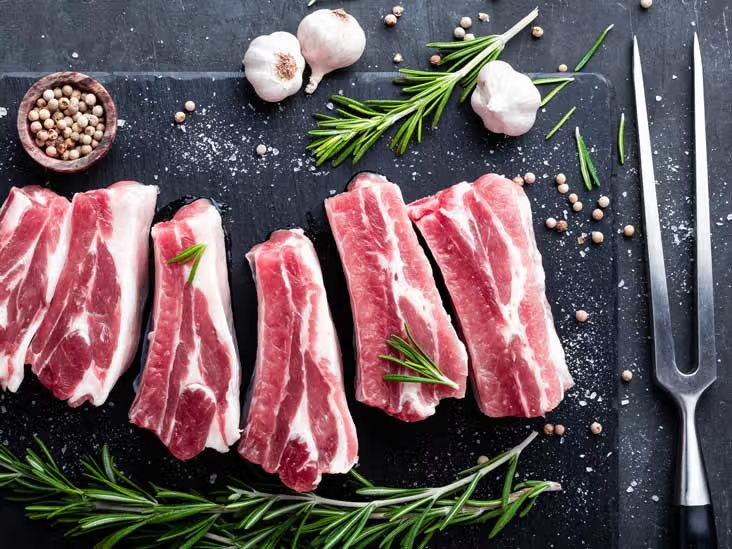
Pork, a type of red meat, is high in protein and minerals, and provides numerous cuts like tenderloin to bacon.
One serving of pork contains:
- thiamine
- vitamin B-6 and B-12
- potassium
- iron
- magnesium
Choosing the leanest cut for weight loss…
Much like beef, some cuts of pork can be high in saturated fat. However, there are some great lean options that can be wonderful to incorporate into the diet. Tenderloin is one of the leanest cuts of pork available.
Pro-tip: When reading meat labels, consider the saturated fats compared to the serving size. Pork is a great source of protein and nutrients, but when processed and flavored can come with a high amount of added sodium such as in bacon and sausage.
Quality matters for your long-term health and longevity
Meat can provide valuable nutrients, but overall evidence suggests that most people would benefit from eating more plant foods and less meat as part of a long-term healthy eating pattern.
So when it comes to meat selection, try to opt for lean, minimally processed cuts to maximize protein and key nutrients while limiting saturated fat and sodium. Meat can be a valuable source of nutrients, but it’s not essential. Well-planned diets without meat can also support good health. If you choose to limit or avoid meat, it’s important to include other sources of key nutrients, like iron and vitamin B12.
But eating fattier cuts of meat every now and again, like pork belly, can be part of a balanced diet. It’s about being intentional and balancing out your nutritional needs, depending on what your diet is.
Credit: Healthline