
The Fiber-Rich Foods Worth Adding to Your Plate
Get used to fiber-rich foods
High fiber-rich foods include whole plant foods, such as fruits, vegetables, legumes, and seeds. They can help support gut health and healthy digestion.
Most people aren’t eating enough fiber. These foods can help you boost your intake and support good gut health.
Fiber is a nutrient that’s critical for optimal health.
Only found in plant foods, eating enough fiber is associated with a lower risk of numerous chronic diseases like heart disease, type 2 diabetes, certain cancers, digestive conditions, and obesity.
Much of this benefit comes from how fiber nourishes beneficial gut bacteria, which influences many aspects of physical health.
Despite its importance, most people, especially in Western countries, fall short. Many consume only about half the recommended amount (~30 grams), averaging about 14 grams per day. In fact, only about 5% of Americans meet their daily fiber needs.
Understanding where to find fiber, how much to aim for, and whether supplements have a place can make it easier to close that gap and support long-term health.
This article is Day 4 of Healthline’s 7-day “Gut Check” Fiber Fix Challenge. Discover simple ways to keep your gut healthy and boost your fiber intake by following the challenge.
Missed a day? Catch up with Day 3: How much fiber should you eat per day? Or continue on to Day 5: Best fiber supplements.
Which foods are high in fiber?
Fiber is naturally found in whole plant foods, including fruits, vegetables, grains, nuts, seeds, and legumes. Animal products, such as meat, dairy, eggs, and seafood, do not contribute fiber to your diet.
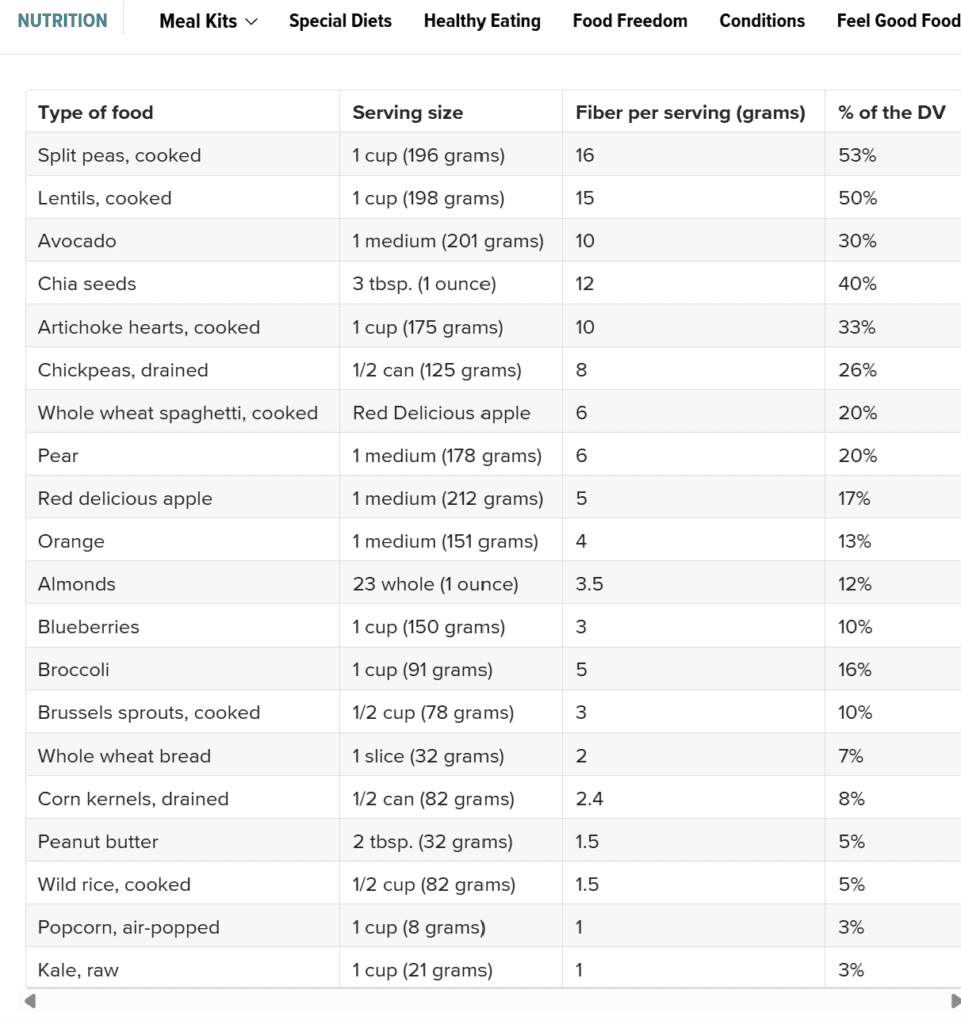
Below is a chart that shows some of the best sources of fiber you can include in your diet.
Note that the % Daily Value (DV)Trusted Source is based on a minimum of 30 grams, which is approximately the average minimum daily need for adult men and women.
Meeting your fiber needs
General guidelines recommend about 25 grams of fiber per day for adult women and 38 grams per day for adult men. After age 50, needs decrease slightly to 21 grams for women and 30 grams for men.
A simple way to think about it: aiming for around 25–30 grams per day is a solid baseline for most adults. Getting more than this, especially from whole foods, can offer additional health benefits.
Despite these recommendations, most people fall short. Because low fiber intake is linked to poorer health outcomes, the Dietary Guidelines for Americans (2020–2025)Trusted Source identify fiber as a nutrient of public health concern.
How to add more fiber to your diet
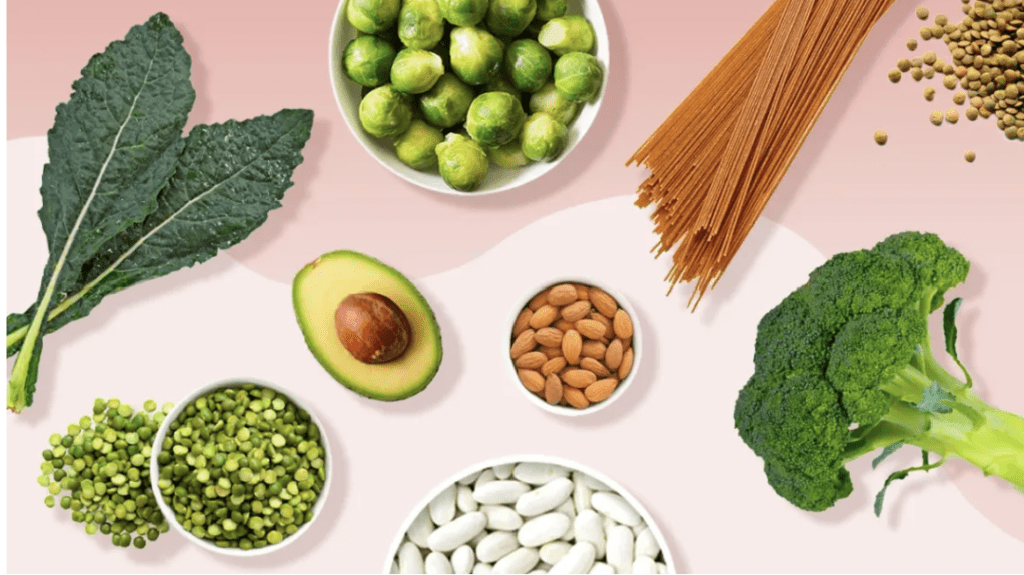
As demonstrated in the table above, the best sources of fiber are whole plant foods, including:
- Fruits (especially whole fruits like apples, pears, and berries)
- Vegetables (such as broccoli, carrots, and leafy greens)
- Whole grains (like oats, quinoa, brown rice, and whole wheat bread or pasta)
- Legumes (including beans, lentils, and chickpeas)
- Nuts and seeds (such as almonds, walnuts, pistachios, chia seeds, flaxseeds, and pumpkin seeds)
Increasing fiber doesn’t have to be complicated. A helpful approach is to consistently choose whole, minimally processed foods whenever possible.
This might look like:
- Swap refined grains for whole grains (e.g., white bread → whole grain bread)
- Add a serving of vegetables to more meals, even breakfast or snacks
- Include legumes a few times per week in salads, soups, or bowls
- Snack on fiber-rich options like fruit, nuts, or seeds
- Keep the skins on fruits and vegetables when possible
If your current intake is low, it’s best to increase fiber gradually. Adding too much too quickly can lead to bloating or discomfort as your digestive system adjusts.
Pairing higher fiber intake with adequate hydration can also help support a smoother transition.
Types of fiber
Most of the time, fiber is discussed as a single nutrient, but it actually includes two main types: soluble and insoluble fiber.
Soluble fiber dissolves in water and forms a gel-like substance in your gut. This helps slow digestion, which can supportTrusted Source healthier blood sugar levels and help lower cholesterol.
You can find soluble fiber in foods like oats, beans, lentils, apples, citrus fruits, chia seeds, and flaxseeds.
Insoluble fiber does not dissolve in water. Instead, it adds bulk to stool, helping food move through your digestive system more efficiently and supporting regular bowel movements while helping prevent constipation.
You can find insoluble fiber in foods like whole wheat products, brown rice, nuts, seeds, and vegetables such as broccoli, cauliflower, and green beans.
You don’t need to track or separate these types in your diet, but understanding the difference helps explain why fiber-rich foods support so many aspects of health.
Most fiber-rich foods naturally contain both types in varying amounts. That’s why the simplest and most effective approach is not to separate them, but to eat a wide variety of plant foods.
In other words, dietary diversity matters most. Different plants provide different types of fiber, and together they support gut health, digestion, and metabolic health.
SUMMARY
There are two types of fiber: soluble and insoluble. Soluble fiber helps reduce high cholesterol and manage blood sugar, while insoluble fiber helps alleviate constipation. Both are important and can be found in plant foods.
Foods vs. fiber supplements
When fiber intake is low and symptoms like constipation occur, healthcare professionals may sometimes recommend fiber supplements to help support regularity in the short term.
While supplements can be useful in specific situations, they’re generally not intended as a primary way to meet daily fiber needs. Whole food sources should remain the foundation of fiber intake whenever possible.
Whole foods provide fiber alongside a wide range of other beneficial nutrients. For example, fruits and vegetables supply vitamins, minerals, and antioxidants that support immune function, overall health, and disease prevention.
If a fiber supplement is needed, it’s helpful to choose one with a simple ingredient list, ideally without added artificial flavors, colors, or unnecessary fillers.
A product that allows flexible dosing can also be beneficial, allowing you to start with a low dose and gradually increase as tolerated.
Some supplements also include prebiotics, which serve as food for beneficial gut bacteria and may further support digestive health.
If you’re struggling to meet your fiber needs, experiencing ongoing constipation, or unsure whether a supplement is appropriate, it’s best to consult a healthcare professional or registered dietitian for personalized guidance.
Takeaway
Fiber is a critical nutrient for health. Getting enough in your diet on a regular basis has been shown to lower your risk of numerous chronic diseases.
The only place fiber is naturally found is in plant foods, including fruits, vegetables, grains, nuts, seeds, and legumes. These should be your main source of this nutrient.
You can also find fiber in supplement form. It can be useful for short-term situations, such as helping alleviate constipation, but it shouldn’t be your main fiber source.
The recommended daily minimum fiber intake is 25 grams for adult women and 38 grams for adult men. Aim for at least this much on a regular basis, and preferably more, for the most health benefits.
Just one thing
Try this today: If you’re not used to eating fiber-rich foods on a regular basis, add just 1–2 new sources to your day to start.
For instance, swap white bread for whole wheat bread, or grab an orange instead of orange juice to add a few extra grams of the nutrient.
Credit: Kim Rose-Francis, Lauren Panoff, Healthline