Things to Know About Sleeping Positions And Their Health Implications
Look at what your sleeping position can say about your health!
Not every sleeping position is good for you!
Everyone sleeps differently; there are loads of positions in bed to sleep in. Some people like sleeping on their sides on a waterbed, others prefer sleeping on their backs on a hard mattress – but we all do it. We spend about a third of our lives asleep, which is a lot!
But what’s the best position to sleep in?
Health
Sleeping is very important for your body and mind; in a way, you’re charging yourself. That’s why sleep deprivation can have negative consequences; it can affect your memory, your concentration, your reaction time, your decisiveness, your emotions and your physical well-being. So, sleeping is good for you. But not just that, your sleeping position can also have a positive or negative influence on your body.
Rest
Try to get at least six hours of sleep every night. Research has shown that sleeping less than six hours is just as bad for you as skipping a whole night’s sleep. It’s okay if this happens once in a while, but even after two weeks of sleeping too little, you will notice a difference in your mind and body. You might think that you function normally after a rough night, but this is actually not the case.
Sleeping position
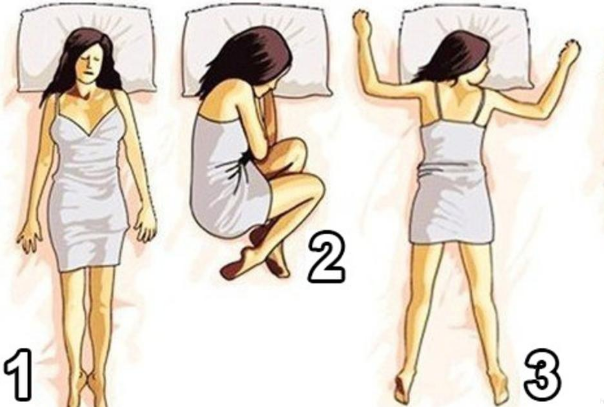
All people can be divided into roughly three categories: those who sleep on their stomach, those who sleep on their back and those who sleep on their side. Your sleeping position can be good for your mind and body, but it can also cause ailments. Practicing good sleep habits — often referred to as “sleep hygiene” — can help you improve your sleep quality for a better night’s rest.
Let’s get one thing out of the way: sleep positions are not one-size-fits-all. There are several sleep styles, and each of them is associated with different benefits and problems depending on your unique conditions and health requirements. The following factors give you a few things to consider before settling on a sleep position:
- Back and neck pain: When it comes to reducing pain, different sleeping positions can have mixed results. If you have soreness in your back and neck, experiment with various different positions and pillows to see what works best for you. In some cases, changing the firmness of your bed may be of benefit.
- Snoring and sleep apnea: Obstructive sleep apnea occurs when the muscles that support the soft tissues in your throat temporarily relax, which often goes hand-in-hand with snoring. Side sleeping is the preferred position for helping calm your sleep apnea.
- Reflux and heartburn: If you experience heartburn, consider sleeping on your back with your head elevated. Otherwise, sleeping on your left side makes it more difficult for acids to escape the stomach.
On your back
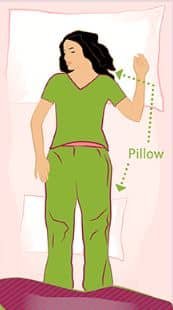
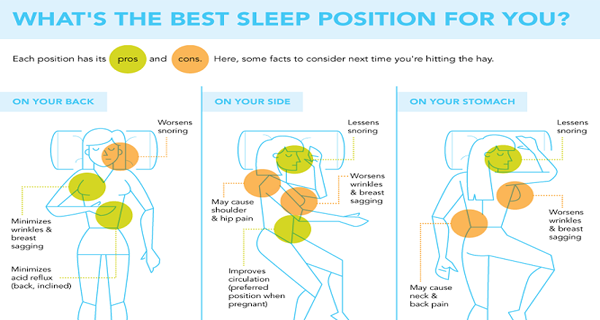
Do you sleep on your back? Then you’re in luck, because this is the most healthy position to sleep in! Sleeping on your back is good for your spine, as it will be aligned nicely. This position causes little strain on the muscles in your back and neck. Moreover, this position is the best for your skin. Your face won’t develop wrinkles and spots as quickly as those who sleep on their side or on their stomach. This position is also good for women, as sleeping on their back will prevent chest wrinkles as well as sagging breasts. The only disadvantage is that it worsens snoring.
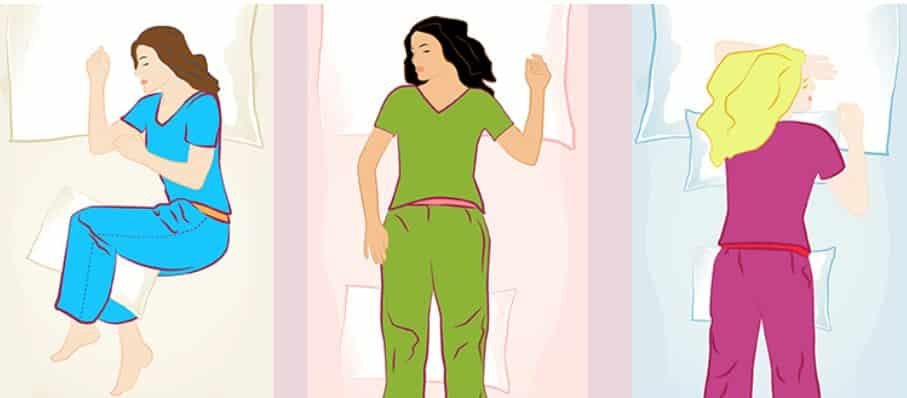
If you sleep on your back, it is importaant to maintain its natural curve. Supporting the back’s positioning can help reduce pain because the muscles endure less stress. Place pillow under your knees and neck to reduce back pressure and cushion your joints.
On your side
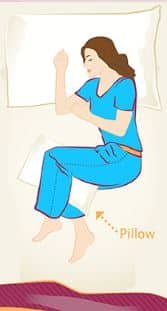
Do you sleep on your side? You’re definitely not the only one, because this is the most common sleeping position. When you sleep on your side you can develop pain in your arms and legs because you’re constantly lying on one side. Sleeping on your right side is also disadvantageous for your digestion and heartburn. An upside: sleeping on your side improves circulation and lessens snoring.
Sleeping on your side is one of the more common and most supportive positions. if this is your position, bring your legs towards your chest at a slight angle and place a pillow between your knees. This can help alleviate pressure on your back by preventing the spine from rotating.
On your stomach
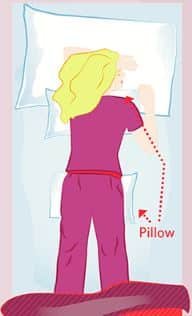
We have bad news for people who sleep on their stomachs. This position is the most unhealthy. You’ll develop neck complaints, since your head is completely turned, and back issues. Your spine has to take on an awkward position, which will also cause you to toss and turn more. Because of this, your sleep will be disrupted more. Also, try sleeping on a full stomach, it won’t be pleasant! It does lessen snoring, though, so you’ve got that going for you.
This position is not recommended because it places significant strain on the back. if you fond this position comfortable, take extra care to support yourself with one pillow below your abdomen and lower pelvis, and another pillow below your neck.